 Keepable
Sanya filayen inda suka dace
Sa hannu, haruffan suna, kwanan wata ko gurbin da mai garantin zai cika. Ka sanya su a shafin kansa, ba fom a gefe ba. Mai sa hannu yana amsa takardar, kuma wanda ya rubuta kwangilar ne ya sanya alamun.
Aika takarda don sa hannu, ka nuna wuraren da ke buƙatar kulawa. Mutumin ya karanta ya tabbatar da passkey. Bangarorin biyu suna ajiye kwafin da aka rufe da rikodin tabbatarwa.
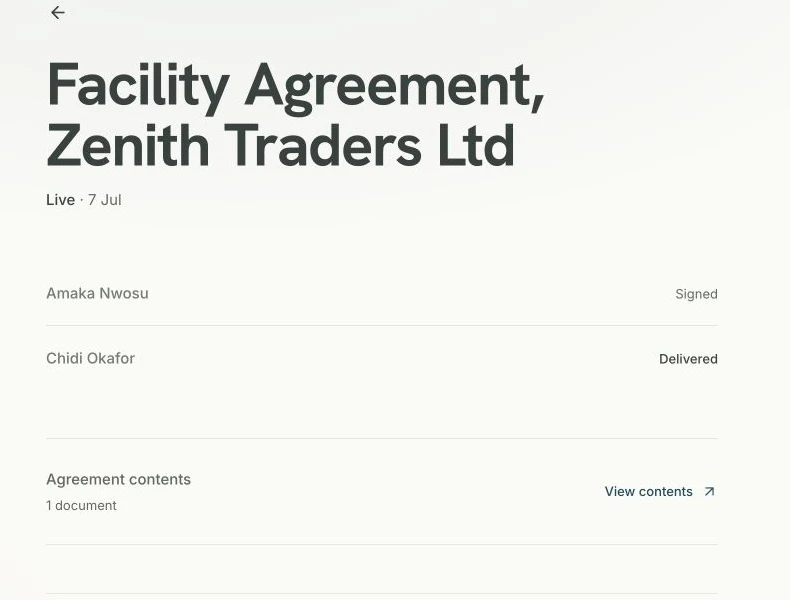
Sa hannu, haruffan suna, kwanan wata ko gurbin da mai garantin zai cika. Ka sanya su a shafin kansa, ba fom a gefe ba. Mai sa hannu yana amsa takardar, kuma wanda ya rubuta kwangilar ne ya sanya alamun.
Ana tabbatar da sa hannu ta passkey a na'urar mai sa hannu, ɗaure da ainihin da NIN da fuskarsa suka tabbatar. Babu hanyar haɗin da duk wanda ya buɗe zai iya amfani da ita.
Kotu, mai tsara dokoki ko lauyan ɗayan ɓangaren zai duba fayil a burauzarsa, ba tare da asusu ko loda PDF ba. Sakamakon yana nuna ko ainihin bytes da aka sa wa hannu da rikodin mai aikawa sun cika ƙa'idojin tabbatarwar Keepable da aka wallafa.
Sa hannun lantarki na ci gaba da rikodin asali da aka sa wa hannu, an rufe a PDF.
Passkey a na'urar mai sa hannu yana sanya hannu kan hash na wannan takardar kaɗai.
An tsara bisa sassan 84 da 93 na Evidence Act, da rikodin da ake dubawa a na'urar mai tabbatarwa.
Ba buƙatar shiga ba. Abin da na'urar ke sa wa hannu an gina shi daga hash na wannan takardar, yarjejeniya da matsayin mutum a cikinta. Yana nuna amincewa da shafin, ba shiga zaman aiki kawai ba. Na'urar tana buƙatar fuska, sawun yatsa ko PIN tukuna, don haka rikodin yana nuna aikin ganganci, ba buɗe waya a kusa ba.
Kowane sa hannu yana rubuta matakin shaidarsa. Na yanzu yana ɗaure da maɓallin mai sa hannu: mai public key zai iya tabbatar cewa na'urar tantancewa ta amince da takardar ba tare da amincewa da mu ba. Ga wanda ba shi da passkey, madadin shaidar dandamalinmu ce. Wanda ke da passkey ba ya sauka zuwa mataki mai rauni a ɓoye.
PDF yana ɗauke da sa hannun Keepable, jerin takardun shaida da rikodin asali da aka sa wa hannu, suna mai aikawa da lokacin karɓar aikawa. Mai tabbatarwa yana duba ainihin fayil da private root da takardun shaidar sa hannun takarda da Keepable ya ba izini a yanzu.
Maɓallin cikin hardware security module ne ke sanya hatimi; ba a fitar da shi zuwa ƙwaƙwalwar sabar manhaja. Maɓallin hatimin Keepable ne. Sa hannun da ke cikin fayil ɗin da aka loda yana cikin bytes ɗinsa, amma Keepable ba ya fassara shi.
Eh. Masu sa hannu, shaidu, wakilan da ke yin aiki ba tare da sa hannu ba, da masu karatu kawai. Sa hannu, haruffan suna ko sunan da aka buga suna bin tsari ɗaya. Kowane alama tana rikodin mutum da lokaci.
Ya buɗe mai tabbatarwarmu, ya zaɓi fayil, ya karanta sakamako. Fayil ba ya barin na'urarsa: burauzar tana ƙididdige hash, shi kaɗai ake aikawa. Babu asusu, ko nema gare ka, ko gare mu sai binciken kansa.
Sa hannun lantarki ba notarisation ba ne. Yana nuna wanda ya sanya hannu, lokaci da ko rubutun ya sauya. Keepable zai iya haɗa shaida a tsarin, amma inda dokar Najeriya ke buƙatar takardar mallaka da hatimi ko rajista, dole a bi wannan hanyar da aka saba.